

Our New Electronic Glass Fabric Line Is Running. Here’s What Changes for You.
NEWS Chongqing, China—October 27, 2026. Short version: Chongqing Dujiang Composites has a new production line making electronic glass fabric, and the first commercial rolls went out this month. A long version follows. If you buy glass cloth for laminates or PCB work, the long version matters.
We’ve made fiberglass products here since 1978. Mat. Woven roving. FRP profiles. Heavy, honest, industrial products. Electronic cloth looks nothing like them. Hold a sheet of 106 up to the light, and it’s almost not there. So when I tell people we’re making it now, the usual reaction is surprise. The smarter reaction is a question: can a mat and roving house actually hit electronic-grade quality?
Fair question. Let me answer it properly.
Electronic Cloth Is Not Woven Roving With a Fancy Name
I’ve heard buyers say that. They don’t buy twice.
Woven roving forgives. So does a chopped strand mat. You can ship those products with minor defects, and the laminate comes out fine. A little fuzz on a roving edge, a slightly loose selvedge—nobody’s tank fails over it.
Critical Quality Note: Electronic glass fabric doesn’t work that way. This cloth goes into copper-clad laminate. The laminate goes into a PCB. The PCB goes into something somebody paid real money for. A broken filament the width of a human hair becomes a resin-rich pit. A dust particle pressed into the weave becomes a drill smear or a via failure three layers down.
That changes everything about how you run a plant. Air has to be filtered. Humidity gets controlled. Looms get tuned so the tension profile stays flat across the whole width. Inspection happens under strong light with trained eyes, roll by roll, not by sampling every tenth pallet.
We knew all this before we bought the first machine. Partly from reading. Mostly from listening—for ten years, customers and friends in the laminate business told us exactly what bad electronic cloth costs them. We took notes.
One of them put it bluntly over dinner in Guangzhou. He said, “When your cloth is good, nobody remembers you. When your cloth is bad, forty people in his plant remember you for a year.” I’ve repeated that sentence to every person we hired for this line.
What We Built
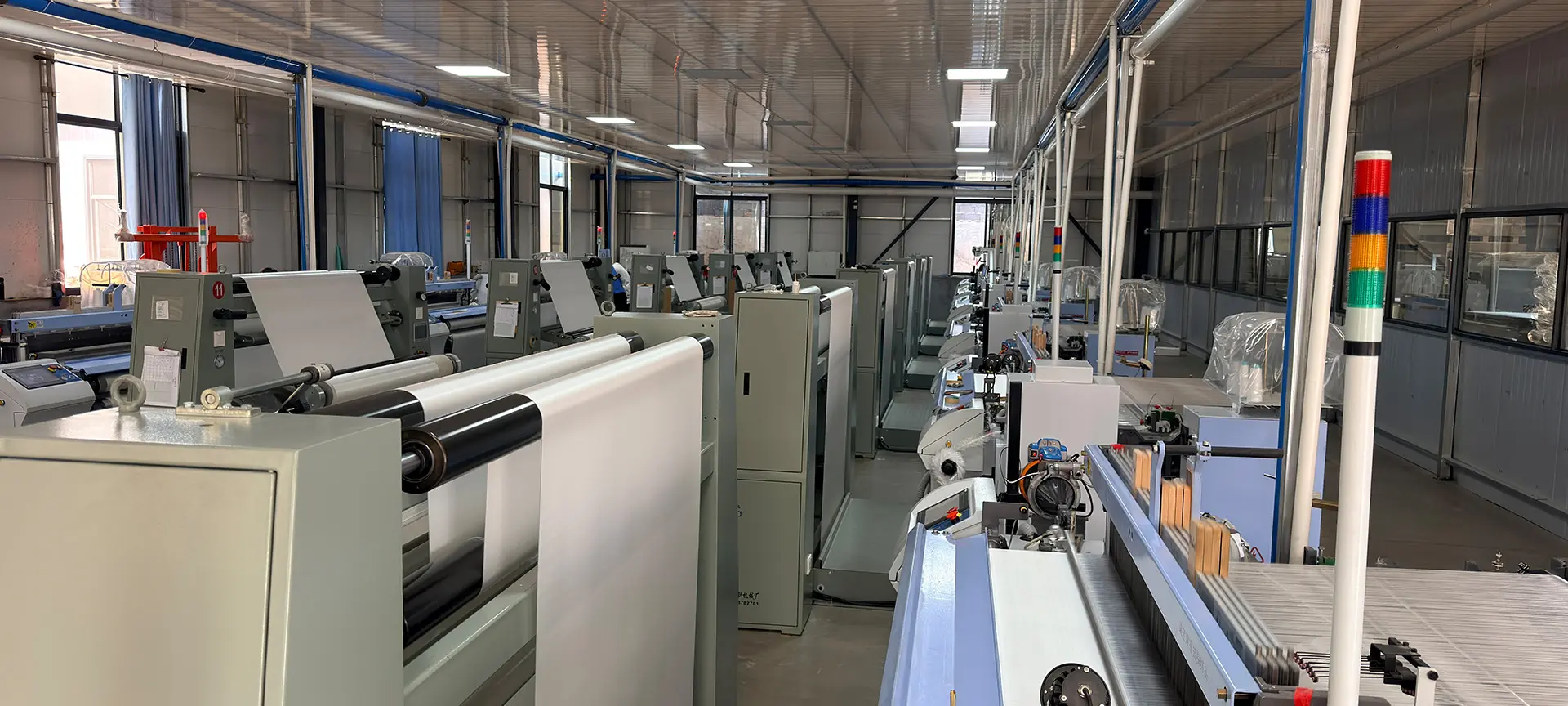
The electronic glass fabric line is new from end to end. Warping, air-jet weaving, heat cleaning, finishing, and inspection, all in one dedicated workshop. Nothing electronic-grade shares space with the mat lines. I don’t want glass dust from a chopper anywhere near a 106 loom, and I’d bet you don’t either.
Capacity & Equipment
Ninety-eight air-jet looms, 1270 mm in width. Current capacity: 1.5 million square meters a month.
Available Grades
Starch-sized for CCL production and silane-finished for electrical insulation boards.
Getting the crew ready took longer than installing the looms. Our inspectors came from laminate plants, so they inspect cloth the way a customer would, not the way a chart tells them to. Our technicians ran trial weave after trial weave for months. Most of it went in the scrap bin. When you’re new at electronic cloth, the scrap bin fills up faster than the shipping rack. That’s what the learning curve actually looks like, and anybody who tells you different hasn’t run the line.
The Styles We Start With
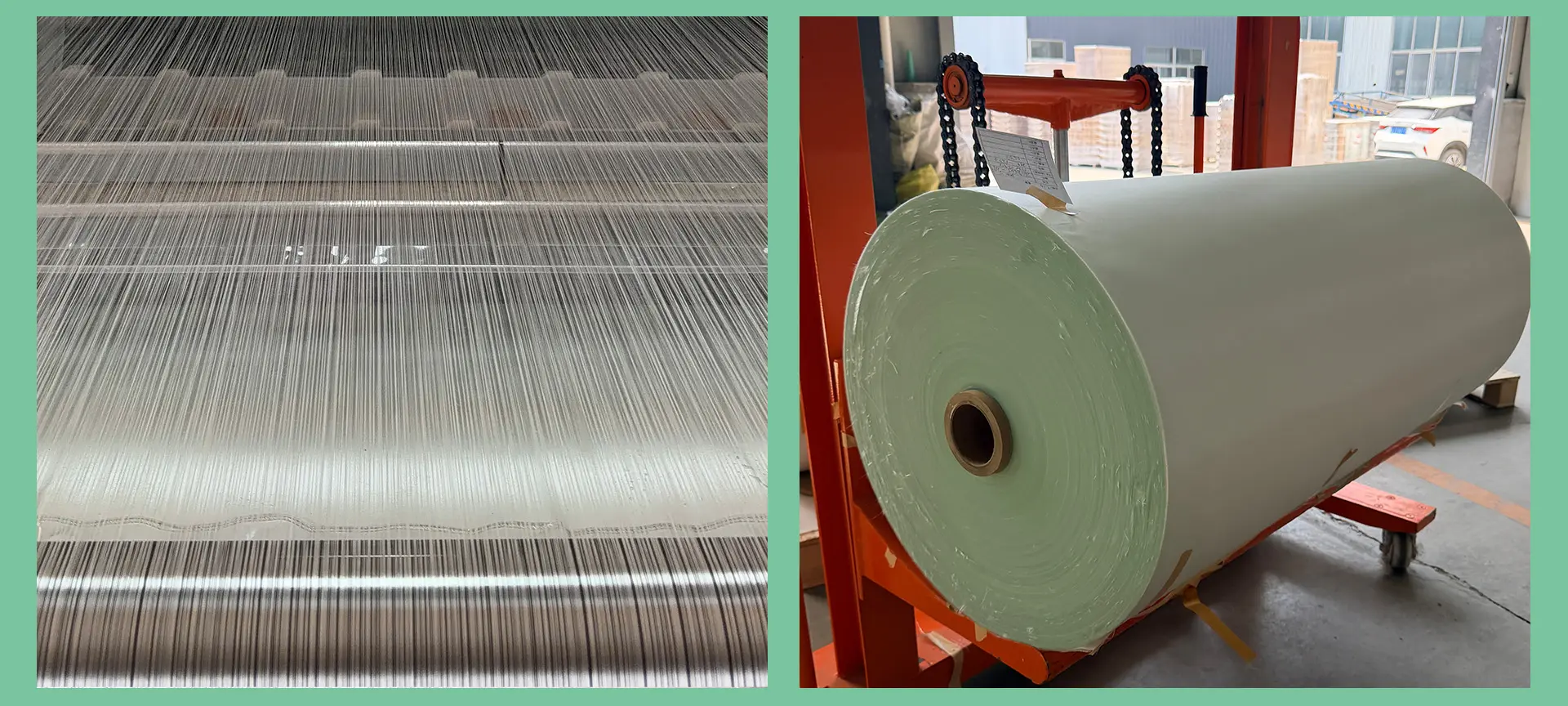
We started with 7628. It’s the volume style, roughly 210 grams per square meter, and all 98 looms run it today. 2116 and 1080 for the thinner laminates, then 106 for the fine work where laminate thickness gets counted in fractions of a millimeter, followed by the line that qualifies each style.
Quality Assurance:
Every roll ships with its lot test report (thickness, weight, tensile strength, and appearance). We hold a retained sample from every lot we make. Always.
Which grade do you need? Rough rule of thumb: CCL production takes starch-sized cloth; insulation board takes silane-finished. If your process sits somewhere in between, say so when you inquire. We’d rather build the right cloth for your press than sell you the cloth we happen to have on the rack.
Why We Keep a Sample From Every Lot
Let me tell you about 2011. We had a woven roving order, several containers. One pallet got a bad sizing run—the finish chemistry drifted on a day when the operator was fighting a pump problem and didn’t flag it. The customer laminated. Gelcoat whitened. Phone calls, claims, a courier of sample panels flying back and forth, and six ugly weeks.
The painful part wasn’t the money. It was that we could have caught it. We were testing per shift, not per batch. The bad run sat inside one batch window we never looked at. We changed the rule the same month.
That story is eighteen years of habit behind every retained sample in our electronic cloth warehouse now. Electronic glass fabric buyers are trusting us with a product where one defect cascades through their whole production run.
What Buyers Get Starting Now
- ✓ Standard styles ship in 2-3 weeks.
- ✓ Retained lot samples and test reports are standard paperwork.
- ✓ Combined shipping: Mix with mat, roving, or profiles in one container.
The market for electronic-grade cloth has been tight for a while. A mid-size mill with fresh capacity and a family’s reputation behind it is not a bad insurance policy for your laminate supply chain. We don’t need to be your biggest supplier. We’d rather be the one you never have to chase.
COME SEE IT
7628 samples are ready to ship now. If you want a mill tour—and for electronic-grade fabric, you should want one—write to us through this site, and we’ll set it up.
Come pull a roll of electronic glass fabric off the inspection table yourself.
Post time: Oct-27-2026


