

Styrene Spiked, Unsaturated Polyester Resin Plants Raised Prices, and Everyone Wants to Know: Stock Up or Sit Tight?
Early November 2026. Styrene in East China ran to RMB 11,500 a tonne, give or take. Buyers panicked.
My phone started ringing at odd hours, and one buyer in Jeddah got me at 6:40 in the morning his time, which meant he'd been up half the night staring at a price screen instead of sleeping, and the first thing he said before hello was "how many drums can you ship this week." Within two weeks the same cargoes had given back most of it, pulling back to around RMB 10,200 a tonne, which left a lot of people holding fresh purchase orders they now wished they'd slept on.
I've been selling unsaturated polyester resin next to fiberglass mats and woven roving since the nineties. I've watched this exact movie maybe six times. Styrene jumps on some news, every resin plant in the country mails a price-increase letter within 72 hours, and my phone fills up with the same question. Should I stock up?
Sometimes the spike is real and lasts a year. Sometimes it's a two-week head fake, like this one. You can't tell which from inside the panic, and nobody can, not the traders, not the plant managers, not me. What you can do is decide your position before the number scares you. Let me walk you through how I answer the question when a customer asks it straight.
01 What actually happened this time
The November pop wasn't even the biggest move of the year. That prize goes to March, when general-purpose 196# resin in China climbed from around RMB 8,000 a tonne to above 10,500 in a matter of weeks, a jump of more than 30 percent, because styrene and the whole aromatics chain went vertical. Then July brought the Middle East conflict, crude spiked, and styrene got pulled up hard again. The composite raw materials index rose over 4 percent in a single month on the back of it.
Europe had its own version. The September styrene contract went up €279 a tonne, and orthophthalic unsaturated polyester resin followed with increases around €100, with producers openly saying October numbers would rise again on the back of the styrene contract alone. So when people tell you resin "suddenly" got expensive in late 2026, no. It's been a bumpy, expensive year, and November was just the loudest bump.
Here's the part that matters for your wallet: The November spike is already unwinding. Spot styrene in East China ran to 11,500 in the first week of November, and as of November 18 the mainstream Jiangsu trades were settling at 10,150 to 10,250, flat against the day before.
Now here's a detail most buyers miss: Jiangsu port inventories are sitting low, holders are reluctant to sell, and the basis is holding firm, while South China is awash in cargoes and drifting weaker. A market that falls on weak crude but refuses to fall further on tight local supply is not a market in panic. Two weeks from top to flatline. That's how fast these things move when the story behind them is thin. Meanwhile the resin price lists that went up in a hurry have been coming down a lot slower, because list prices always ride up on an escalator and down on a staircase, and anyone who watches this market for a living knows the gap between the letter and the deal is where the real conversation happens. Every plant announcement this month says prices are firm. Every one of them also says actual deals are negotiable. Hold both of those facts. We'll come back to them.
02 Why every plant raises prices on the same day
People love to complain about this one. "How come all the resin factories raised prices in the same week? Collusion!" Give me a break. There's no conspiracy. There's arithmetic.
A drum of general-purpose resin is roughly a third styrene by weight, and the rest is phthalic anhydride, maleic anhydride, glycol, plus money for energy, drums, and freight. When styrene adds 500 RMB to the cost of a tonne and your entire margin was 285 RMB to begin with, you don't have a decision to make. You send the letter. Every plant sends the letter, because they're all drinking from the same feedstock pool.
And that 285 figure isn't made up. Industry tracking put the average gross profit for China's unsaturated polyester resin makers at about RMB 285 a tonne in the first half of 2026, the worst level in five years. One week in late July the weekly number was actually negative, minus 153. This industry has been selling at the edge of break-even all year. They are not sitting on fat cushions that let them absorb a feedstock spike for your convenience.
03 The eighty drums under the tin roof
Alright. Story time, because this is the part numbers won't teach you.
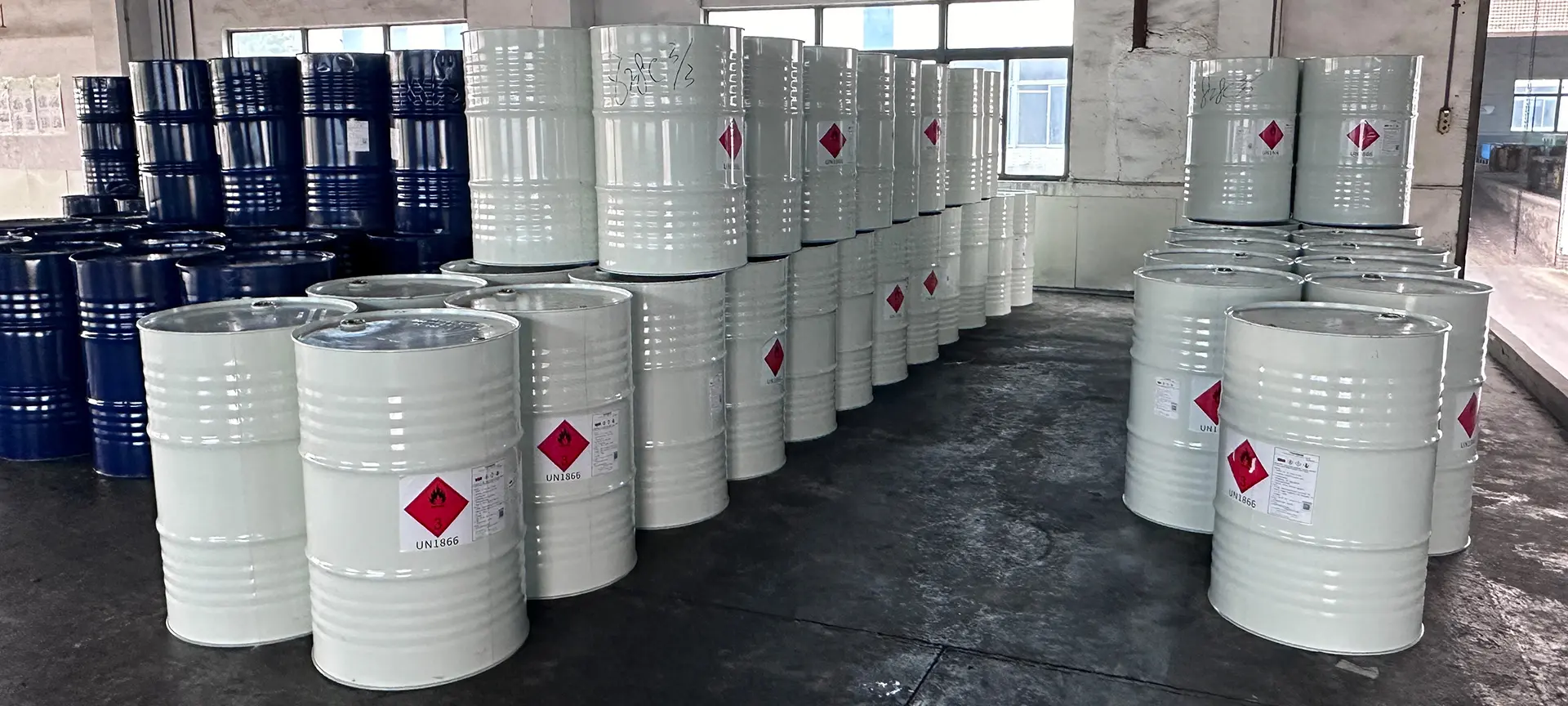
A few years back, 2024 I think, a buyer in Surabaya ran a shop building FRP septic tanks and small water tanks. Decent shop. Hard workers. Styrene jumped, his resin supplier sent the letter, and he did what felt smart. He wrote one big order. No, wait. Eighty drums. Doesn't matter. He stacked them under a tin roof next to his lamination shed and felt like a genius for about six weeks.
The result? Air bubbles everywhere. Poor wet-out between layers, so the tanks felt right in the yard and delaminated under pressure testing.
He fought it for weeks, blaming his workers, blaming the catalyst, blaming me when I visited, because I'd sold him the glass. I found him hunched over a mixing bench with a pocket full of syringes, dosing MEKP like a man seasoning soup he'd already ruined, and I took the syringe out of his hand and told him to stop, because no amount of cobalt naphthenate was going to put life back into resin that had been cooking under a tin roof since the dry season.
04 What stockpiling really costs you
Here's what the panic buyers never price in. A drum of unsaturated polyester resin carries a shelf life around three months at 25 degrees, maybe six if your warehouse is genuinely cool and shaded and the drums sit off the ground, and I will bet you money yours is not as cool as you think.
Gel time drifts. Styrene weeps out through the vent bung, the air cure climbs, the cobalt promoter settles to the bottom where your pump can't reach it. None of this shows on day one. It shows on the worst possible day.
And the money itself deserves a hard look. A hundred drums of unsaturated polyester resin is a serious pile of cash sitting in plastic, earning nothing, getting slowly worse. Your accountant calls it inventory. I've watched too many balance sheets where the inventory line was quietly worth forty cents on the dollar, and nobody found out until a claim landed. If you bought it on borrowed money, you're paying interest to watch your own inventory depreciate.
05 When I'd stock up anyway
Now, before you think I'm preaching never hold stock, that's daft. Plenty of situations call for a deep shelf.
If you burn one grade consistently, twenty-plus drums a month, year round, and your plant sits a long sea voyage from your supplier, holding 60 to 90 days of cover isn't speculation, it's operations. For him, running out of unsaturated polyester resin mid-season isn't an inconvenience, it's a line stoppage with payroll attached.
The Smarter Play
Ask your supplier for a formula. Raw-material-adjusted pricing, tied to a published styrene index, reviewed monthly. A formula beats a stockpile in every way. You never overpay at the top, you never get squeezed at the bottom.
06 How I'd play this one
So. Styrene spiked, the plants raised prices in step, and you're asking me if you should load up. No. Not like that, anyway.
Cover your real needs. Sixty to ninety days if your supply line is long, thirty to sixty if you're buying domestic. Rotate, shade, keep drums off the concrete. Then stop. Do not write a heroic order at the top of a spike because a number scared you.
One more thing: A supplier who tells you "buy everything now, it's only going up" is telling you about his cash flow, not your future. You already know how to read the plant announcements. Prices firm, deals negotiable. Both halves of the sentence, every time.
Need a specific analysis?
Send me your monthly unsaturated polyester resin tonnage, your grade, and your port. I'll tell you what I'd do with your money.
```
Post time: Nov-19-2026


