

Fiberglass Mat vs. Woven Roving: Which Reinforcement is Best for Boat Building?
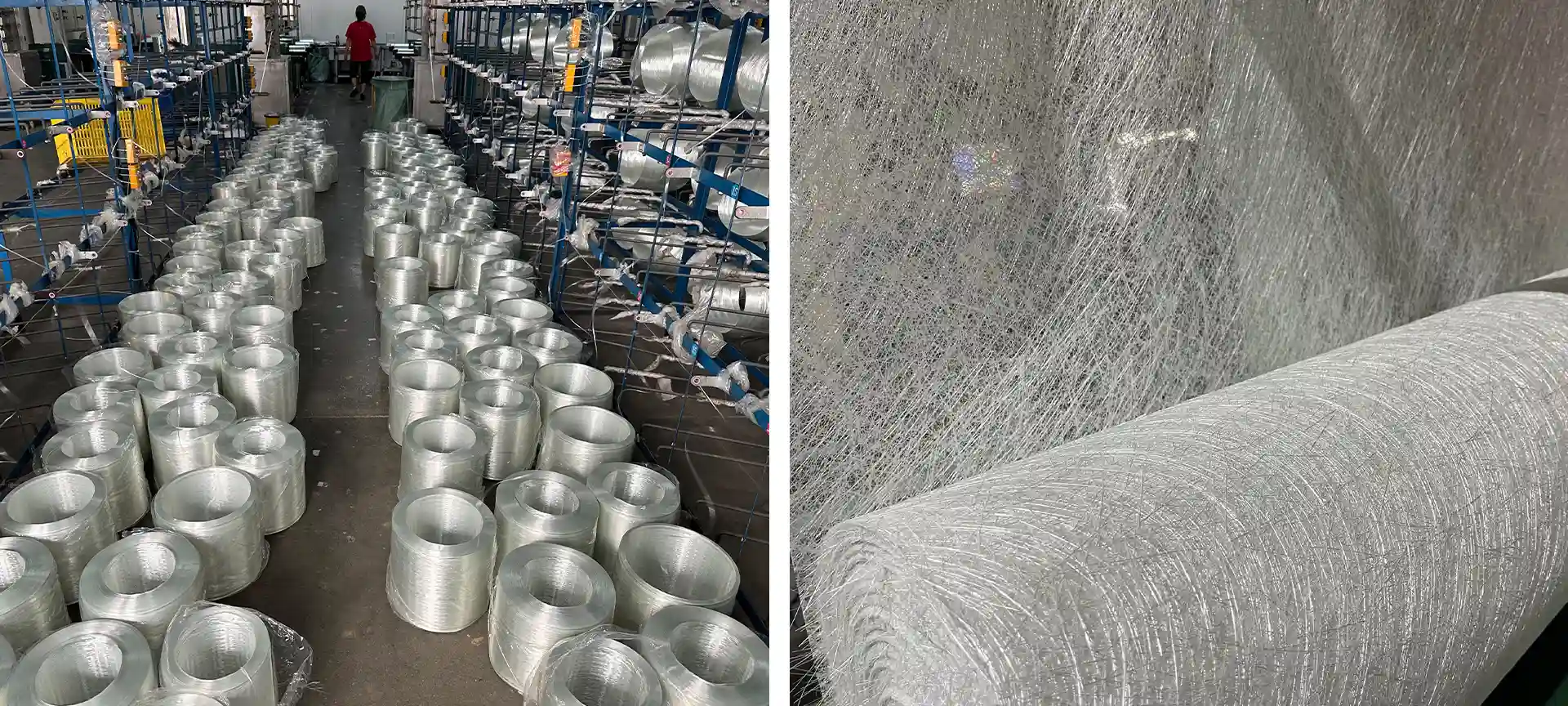
Walk into any marine supply store and ask for “fiberglass,” and you’ll get a blank stare followed by a question: fiberglass mat or woven roving? Most people building or repairing a boat for the first time don’t even know there’s a choice to make. They just buy whatever the guy behind the counter hands them, and sometimes that works out fine, and sometimes it doesn’t.
Chopped strand mat and woven roving are the two fabrics you’ll run into most in hand layup boat work. They’re not really competitors, though—they’re used together, in specific spots, for specific reasons. Mixing them up, or skipping one entirely, is a pretty common way people end up with a hull that looks fine for a year or two and then starts showing print-through or, worse, delaminates.
Here’s what actually separates them.
Chopped Strand Mat
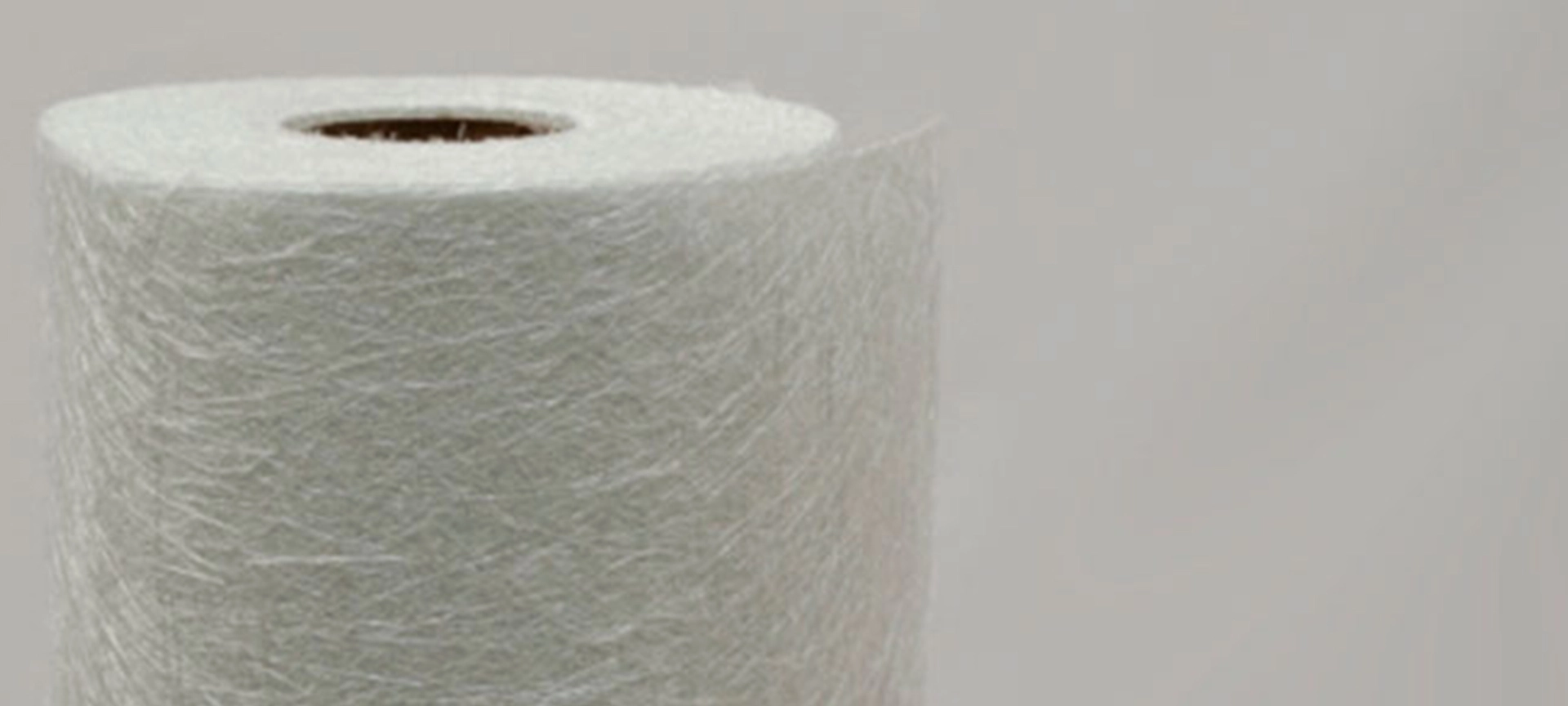
Chopped strand mat is short glass strands, an inch or two long, scattered in random directions and held together with a binder—either a powder binder or an emulsion binder. It doesn’t matter much for our purposes except that it needs styrene-based resin (polyester or vinylester) to dissolve properly. This trips people up more than you’d think. Epoxy doesn’t break the binder down the same way, so if you try to laminate a mat with epoxy, you can end up with a stiff, half-wetted mess that never really bonds right.
It’s made by chopping continuous glass fiber and dropping it onto a belt where the binder sets the random pattern. No grain direction, no weave — just scattered fibers everywhere. You’ll usually see it in 1.5 oz, 2 oz, or 3 oz per square foot, and 1.5 oz is what most people reach for on hull work.
The thing about mat is that it drinks resin. A lot of it. You’re looking at something like a 25/75 glass-to-resin ratio, which means the finished laminate is heavier than you’d expect for the amount of glass in it. That sounds bad, and for pure strength-per-pound, it kind of is. But that same property is what makes chopped mat good at the jobs it’s good at—it conforms to tight curves and corners that a stiff woven fabric would just bridge across, and it fills in the coarse weave pattern of roving so it doesn’t print through your gelcoat.
Woven Roving
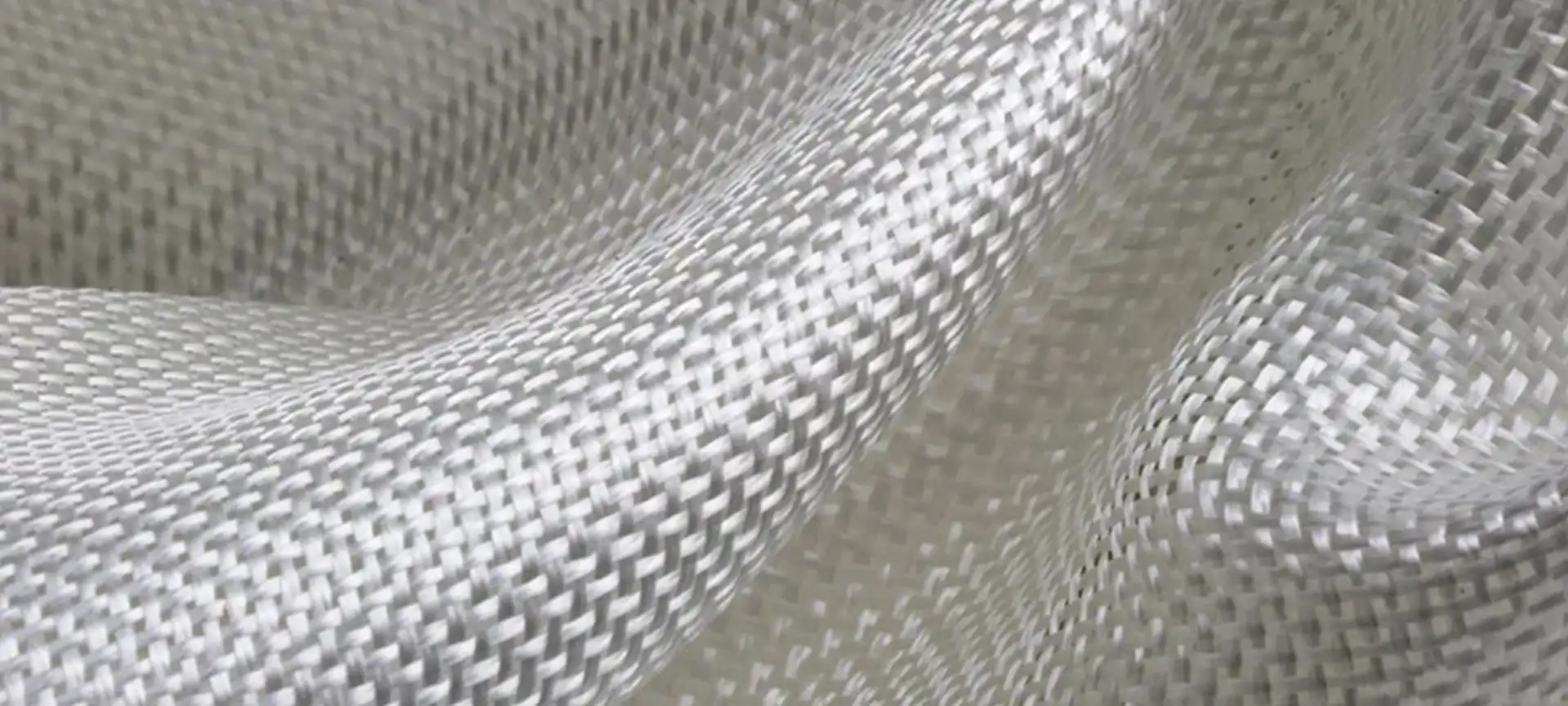
Completely different material. Instead of chopped random strands, woven roving is continuous glass fiber bundles actually woven into fabric—plain weave, 0 and 90 degrees, kind of like burlap but made of glass. You can feel the individual tows with your fingers.
Weights typically run 18 to 24 oz per square yard. Heavier stuff — the 24 oz range — shows up on hull bottoms and anywhere that’s going to take real structural load or impact.
Because the fibers run continuously instead of being chopped up and scattered, roving is a lot stronger per pound than mat. It also needs less resin to wet out properly, closer to 50/50 glass-to-resin, so you end up with a lighter, stronger laminate for the same amount of glass. The catch is it doesn’t want to bend around tight curves—push it into a sharp corner, and it bridges, leaving a void underneath that you won’t see until the gelcoat cracks over it years later. It also leaves a visible weave texture if you put it right under a finish coat, which is exactly why you don’t.
So Which One Is Actually Better?
Neither, and that’s not a cop-out answer. Ask any builder who’s laid up more than a couple hulls, and they’ll tell you the same thing: you use both, in alternating layers, because they’re doing different jobs.
Fiberglass roving carries the load. Fiberglass mat ties the layers together and gives you a smooth surface where it matters. Skip the mat between layers of roving to save time or material, and you’re setting yourself up for interlaminar problems down the road—the layers just don’t key into each other as well without something filling the gaps between the coarse weave.
A typical schedule against gelcoat goes something like this: mat first (stops print-through), then roving, then mat again, alternating as many times as the layup calls for. The first layer is basically always mat, no matter what else you’re using, because roving straight against gelcoat almost always telegraphs through eventually.
Where Each One Actually Gets Used
Glass fiber mats are your pick for anything with tight curves—chines, stringers, and transom corners—because they stretch and tear by hand and conform without a fight. It’s also what you reach for on small repair patches where you don’t need a ton of structural strength, just a good bond and a smooth finish.
Glass fiber roving goes where the structure actually matters: hull bottoms, transoms, bulkheads, and anywhere that’s going to flex or take an impact. If you only had roving and no mat, you’d end up with a laminate that’s strong in theory but has weak spots between layers, plus visible weave patterns everywhere near the surface. Not a great combination.
A Few Ways People Get This Wrong
Using epoxy with a mat that’s bound for polyester resin is probably the most common mistake I see—the binder just doesn’t dissolve the way it’s supposed to, and you get a laminate that looks fine until it doesn’t.
Skipping fiberglass mat between roving layers is the other big one, usually done to save time on a repair. It might hold up fine for a while. It’s also one of the more common reasons older repaired hulls start delaminating.
And then there’s picking fabric weight based on whatever’s sitting on the shelf rather than what the actual section needs. A hull bottom and a cabin top are not the same job. Treating them the same either wastes weight where you don’t need it or underbuilds where you do.
Quick Answers to Common Questions
Is woven roving stronger than mat? Per pound, yes, by a good margin—continuous fibers just carry a load better than scattered chopped strands. Mat isn’t there for tensile strength; it’s there for bonding and surface finish.
Can you skip the mat and just use roving? You can, but it’s asking for trouble on anything structural. Without a mat between layers, you lose interlaminar strength, and you’ll probably see the weave pattern show through eventually.
What’s the right combination for a hull repair? Mat against the surface, roving for strength; mat again if you need more buildup. The exact schedule depends on the size and location of what you’re fixing—there’s no single right answer that covers every repair.
Bottom line: this isn’t really a “vs” situation despite how the question usually gets asked. Fiberglass mat and woven roving solve different problems, and most solid boat work uses both, in the right order, in the right spots. Pick a winner, and you’ll end up with a laminate that’s either too heavy and weak or strong but full of hidden weak points. Use them the way they’re meant to be used, and you don’t have to choose at all.
Post time: Jul-08-2026


