

Fiberglass Roving Procurement Guide: Direct vs. Assembled Roving
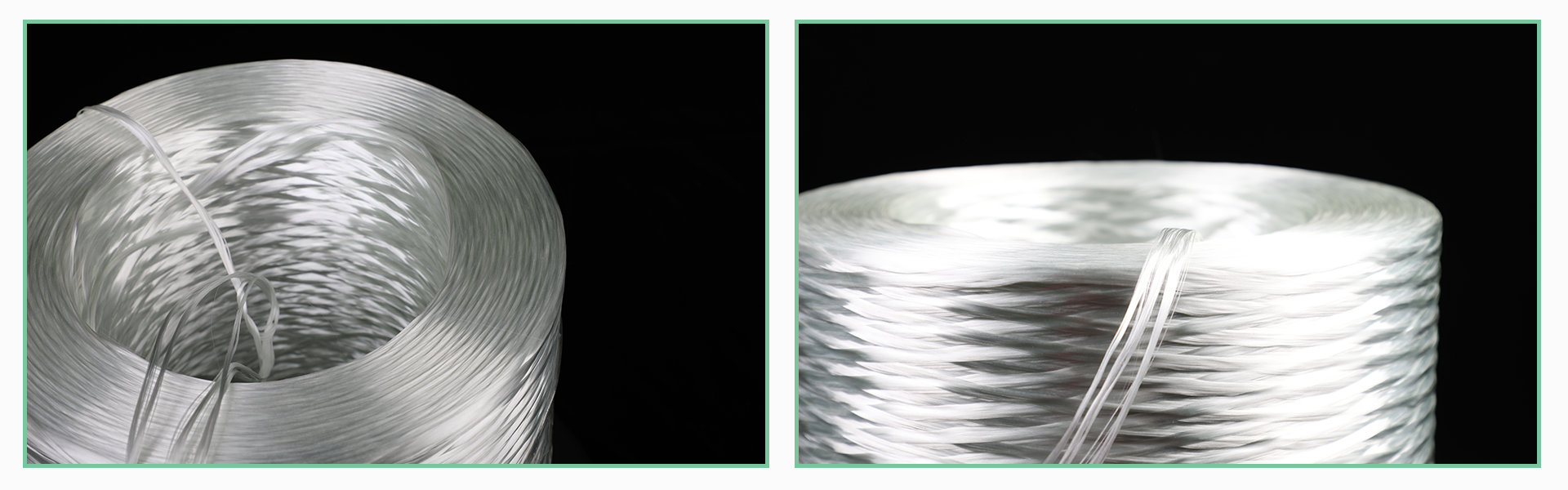
In the world of composite manufacturing, treating fiberglass roving as a commodity is a common mistake that leads to hidden costs. When you choose between direct roving (Single-end) and assembled roving (Multi-end), you aren’t just picking a material—you are dictating your production line’s efficiency, scrap rates, and final product quality.
As a procurement professional, your goal is to minimize the “Total Cost of Ownership” (TCO) rather than just hitting a low unit price.
1. The Core Distinction: Process Logic
Understanding the difference boils down to how these materials behave on the factory floor:
Direct Roving: Produced by drawing filaments directly from the bushing into a single, continuous strand. It is engineered for consistency and high tensile strength.
Assembled Roving: Created by bundling multiple smaller strands together. It is engineered for flexibility and rapid resin impregnation.
2. Decision Matrix: Choosing the Right Material for Your Shop Floor
Don’t let a supplier dictate the material based on their inventory. Use this logic to align the material with your manufacturing process:
If You Run High-Speed Automated Lines (Pultrusion/Filament Winding)
The Procurement Reality: Every minute of downtime costs thousands. You need a material that won’t snap under high tension.
Recommendation: Stick to Direct Roving. Its continuous structure ensures fewer breaks and less fuzzing. Using assembled roving here often leads to strand tangling, which can jam guides and destroy expensive dies.
If You Run Complex Moldings or Hand Lay-ups (Spray-up/SMC)
The Procurement Reality: You are dealing with complex shapes and tight radii. You need the material to “wet out” (soak up resin) immediately.
Recommendation: Choose Assembled Roving. Its multi-strand nature creates micro-channels that allow resin to penetrate the bundle quickly. Furthermore, its superior “cutability” makes it ideal for SMC choppers, preventing the static build-up common with direct rovings.
3. The “Inner Circle” Procurement Checklist
When negotiating with suppliers, use these technical questions to filter out the high-quality partners from the average ones:
“What is your documented breakage rate per 100 kg?” * Why ask this: High breakage rates mean your operators are stopping the line constantly. A slightly higher price for a more stable roving is almost always cheaper than the cost of machine downtime.
“Provide the sizing compatibility data for my resin system.”
Why ask this: The chemical coating (sizing) must match your resin (epoxy, polyester, etc.). A mismatch results in “white spots” (dry glass) in the finished part, which causes structural failure and massive batch rejects.
“How is your roll stability during storage?”
Why ask this: Poor winding tension at the factory causes the spool to collapse while sitting in your warehouse. A collapsed spool is useless material that goes straight into the trash.
4. Procurement Strategy Table
|
Production Goal |
Recommended Roving |
Procurement Rationale |
|
Maximized Throughput |
Direct Roving |
Lower breakage, higher uptime on automated lines. |
|
Complex Geometry |
Assembled Roving |
Better mold conformability and faster wet-out. |
|
Cost Control (General) |
Assembled Roving |
Generally lower price point, high versatility. |
|
Structural Integrity |
Direct Roving |
Superior stress distribution in long beams/pipes. |
5. Expert Advice for Your Next RFQ
Do not settle for a technical data sheet (TDS) alone. If you are switching materials or exploring new suppliers:
Request a Trial Run (Sample Reel): Never buy a full container based on a datasheet. Order a few pallets and have your production team run them through a real shift.
Observe the “Fuzz”: When the material runs, look at the guides. If there is a pile of white glass dust (fuzz), you are losing material weight and creating a maintenance headache for your cleaning team.
Conduct a Wet-out Test: Ensure that the resin penetrates the roving within your required cycle time.
Are you currently dealing with production issues like fiber breakage or resin-related defects? If you provide your main manufacturing process, I can draft a technical specification questionnaire that you can send to your suppliers to ensure you get exactly the grade of roving you need.
Post time: Jun-15-2026


