

Electronic Fiberglass Fabric: What Buyers Get Wrong Before They Order
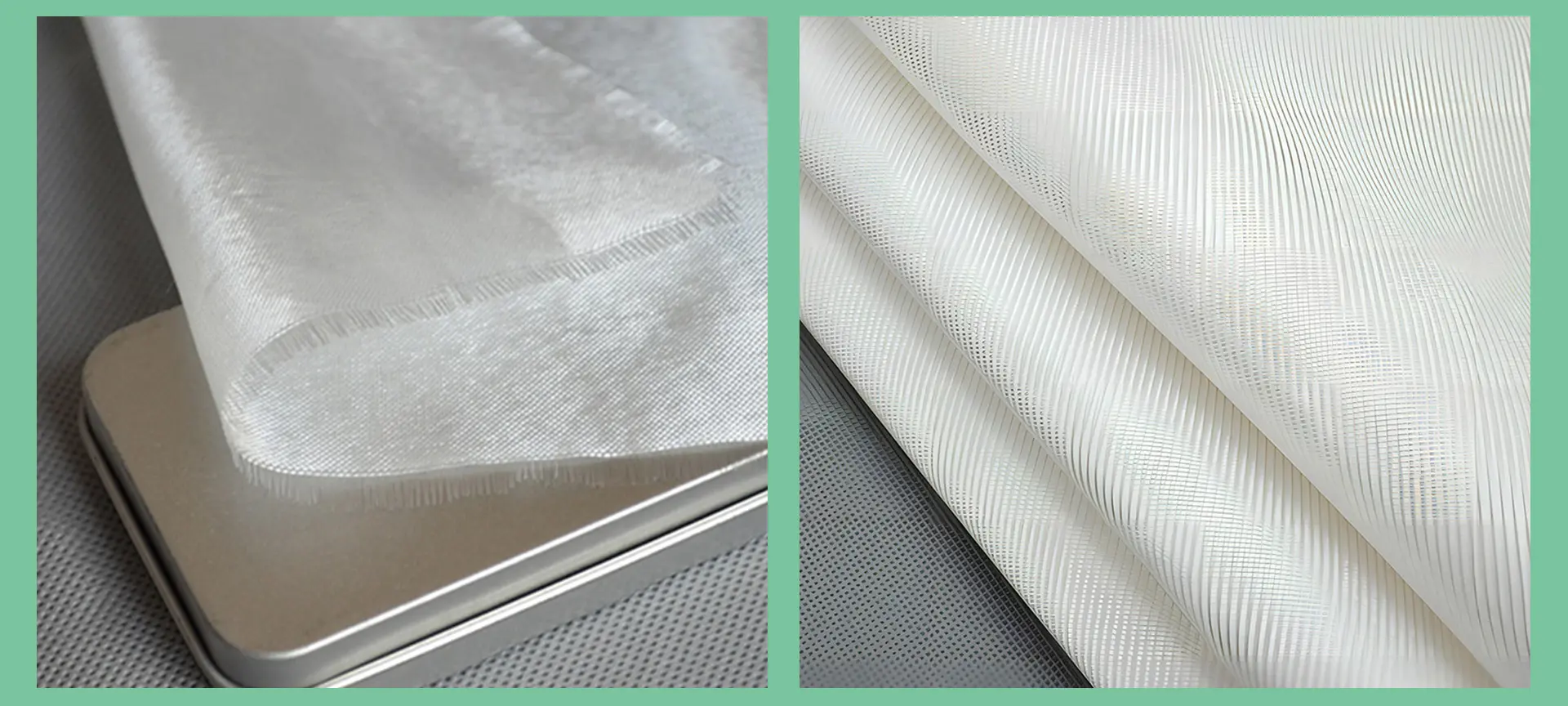
Every roll of electronic fiberglass fabric looks the same in the wrapper. White, thin, wound tight on a paper core. You find out what you actually bought when it hits the prepreg line.
I got into composites in 1989. My first years were tanks, pipes, and manhole covers. Woven roving, chopped strand mat, polyester resin, rollers, and resin all over my boots. Electronic fabric came much later, and it humbled me fast. Every instinct I had about handling glass was wrong at 47 grams per square meter.
Here is the difference in one line. Woven roving is structure. Electronic fiberglass fabric is dielectric. One carries a load. The other carries the signal, and it has to carry it at 10 GHz without drifting.
That one difference rewrites every rule. A tight pick in a 600 g/m² roving? You may never notice it. The same defect in a 7628 roll shows up as a warp streak in the laminate, and then it shows up as a rejected lot in your customer’s incoming inspection. I have watched a container get turned around over a streak you could barely see.
So let me save you some money. This is what actually matters when you buy electronic fiberglass fabric and where suppliers quietly cut corners.
Thin Fabric, Fat Ego
The first thing people get wrong is thinking of electronic fabric as a scaled-down version of what I already made.
It is not. The glass composition is different. E-glass for electronics has tighter limits on alkali oxides, and the boron and fluorine content is controlled because both of them move your dielectric constant around. Iron has to stay low too. Iron in the batch is a loss factor problem.
Then there is the drawing. A G75 yarn is nine microns per filament. A D450 is around five or six. At that diameter, every bubble in the bushing becomes a weak spot, and every weak spot becomes a broken filament on the loom. That broken filament becomes fuzz. That fuzz becomes a defect in the prepreg.
I have stood at a bushing and watched a single filament break and start a chain reaction down the line. That was in 2011 in a plant I will not name. Two hours of production became scrap.
So when you evaluate a supplier, ask about filament diameter and yarn tensile, not just areal weight. A mill that makes good electronic fiberglass fabric controls the bushing first and the loom second. If they talk about the loom before they talk about the bushing, they are guessing. Areal weight is the easiest number in the world to fake. You can hit the gram weight with a sloppy yarn and a wrong weave, and the roll will still pass a scale.
Your Yarn Count Is Your Real Spec
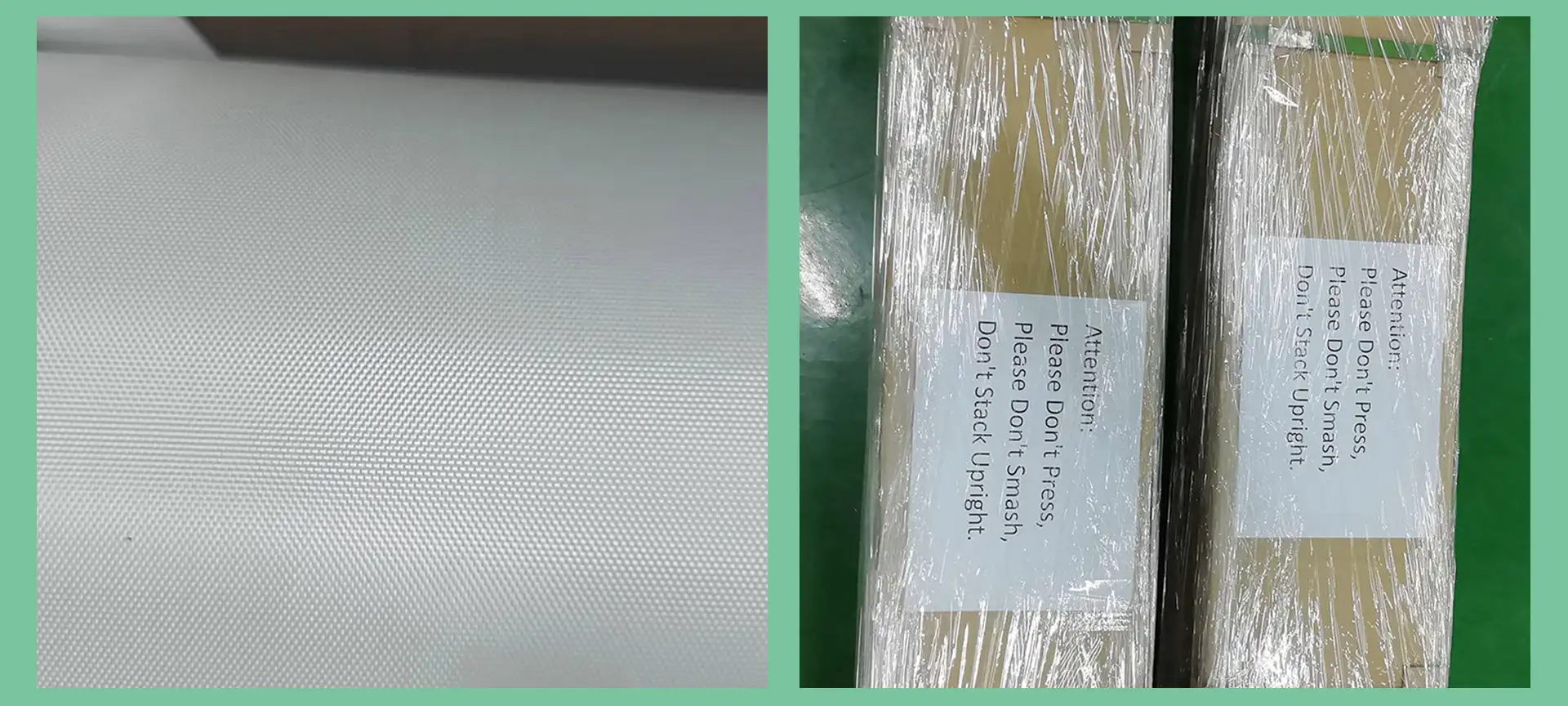
Buyers send me datasheets all day. Half of them list style numbers and nothing else. Style 1080, style 2116, and style 7628. That is a starting point, not a specification.
You want the construction spelled out. Warp yarn, weft yarn, ends per inch, picks per inch, and whether those yarns are single or plied.
Take the styles you probably already know. A 1080 runs a D450 in both directions with roughly 60 ends and 47 picks per inch. It comes in around 47 g/m² and lands near 0.048 mm thick. Thin, floppy, and it will teach you respect for tension control. A 2116 sits closer to 104 g/m² with G75 yarns and a much denser weave. A 7628 is the workhorse for standard FR-4. G75 both ways, about 44 ends and 31 picks, close to 203 g/m², and roughly 0.17 mm thick.
Now watch what happens when a mill is running late. They add a pick or two to make weight without changing the yarn. The roll weighs right. The laminate gets stiffer, and the resin content drops. Your dielectric constant moves. Your impedance moves with it. If you are building controlled impedance boards, that shift is not a small thing, and it will not show up until the board is etched.
I ask for ends and picks on the certificate of analysis for every lot. If a supplier cannot give me those two numbers per roll, I do not care what else they can give me.
Weave: The Choice You Cannot Undo
Plain weave. Twill. Satin. Four-harness satin. Those are the choices for electronic fiberglass fabric, and they change everything downstream.
Plain weave is the tightest and the most stable. It has the most interlacing points, so it resists distortion, and it gives you a consistent surface. The cost is crimp. Every time a warp yarn goes over and under, it bends. That bend creates a resin-rich pocket and a small dielectric discontinuity. At low frequency, you never care. At 10 GHz or 25 GHz, you might.
Twill and satin reduce the crimp. Yarns float over more of their length, so they stay flatter and the fabric drapes. Satin gives you better wet-out and a smoother surface for the copper foil. The trade-off is dimensional stability and cost. Satin weave on a thin fabric is a nightmare to keep square, and I have seen more warp distortion on satin than on anything else.
There is also the drilling question, and people forget it until their yield tanks. Every yarn crossover is a spot where the drill bit hits a different material. Resin and glass cut at different rates. More interlacing means more resin-rich pockets, which means more chance of a gouge, a nailhead, or smear at the hole wall. On a 0.2 mm hole with a high aspect ratio, weave matters as much as drill parameters.
So do not pick the weave off a price list. Tell your mill what board you are building, what your drill stack looks like, and what frequency you are running. Make them pick it and make them defend it.
The Finish Is Where Suppliers Quietly Cheat
This is the part that annoys me most, and it is the part buyers ask about last.
Raw fabric off the loom carries starch, oil, and a sizing that the weaving process needed. You cannot laminate that. It has to come off, and then a coupling agent has to go on. The coupling agent is usually a silane, and the silane is what lets the resin actually bond to the glass instead of just sitting next to it.
Get the finish wrong and nothing looks wrong at first. The prepreg handles fine. The laminate presses fine. Then the parts go through thermal cycling, or through a reflow profile twice, and the copper starts lifting at the edges. Delamination. You will chase your press cycle for a month before someone thinks to question the fabric.
I watched that happen in 2016. A customer swapped to a cheaper source of electronic fiberglass fabric to save maybe four percent on material cost. Six weeks later they had a thermal shock failure on a board going into an automotive application. The silane was epoxy-compatible on paper. In practice the coverage was uneven and the loss on ignition was drifting batch to batch. That four percent cost them a customer.
What you should ask for is the finish designation and the loss on ignition, and you should ask for LOI on every shipment. Typical electronic fabric runs the sizing in a narrow band, usually under one percent by weight, and I want to see it in a range, not a single pass number. Batch to batch consistency of LOI tells you more about a mill’s process control than any certificate they print in color.
Dk and Df: The Two Numbers That Decide Your Board
If you are building anything above a few gigahertz, you are buying a dielectric constant and a dissipation factor. The glass is not the whole story, but the glass is the part that surprises people.
When you buy electronic fiberglass fabric for a high-speed stack, you are buying a dielectric, not a reinforcement. That reframing fixes most bad decisions before they happen.
Standard E-glass lands around Dk 6.5 and Df in the low thousandths depending on frequency and test method. Copper is 1, air is 1, typical FR-4 resin is around 4. When you press glass and resin together, what you get is an average, and the average depends on how much glass is in there. That is why resin content is not a paperwork detail. Twenty points of resin content difference moves your Dk more than most people expect.
Above that, you get the low-Dk families. NE-glass sits near Dk 4.4 to 4.7. Low-Dk low-loss grades push Df down toward 0.002. Quartz-based products go lower still, into the Dk 3.7 range with a dissipation factor that is almost embarrassing, and they cost accordingly.
Here is the thing that costs real money. Glass fabric is not a homogeneous sheet on a board. It is bundles of yarn with resin between them. At high frequency, the signal sees the yarn region and the resin region as two different dielectrics. That is where fiber weave effect comes from, and it is why two boards built from the same materials can have different insertion loss if the fabric orientation relative to the traces is different.
If you are chasing 112 Gbps, this is your problem. Not your resin. Not your copper roughness profile alone. The weave.
I have stopped trying to win that argument with a datasheet. I send samples and let the customer run their own test vehicle. It is faster.
Loomstate, Heat-Cleaned, Silane-Treated
Suppliers will offer you electronic fiberglass fabric in three states, and picking wrong is expensive in a boring way.
Loomstate is greige. Sized for weaving, nothing else. Cheapest, and you need your own heat cleaning and finishing before you can use it. That means equipment most board shops do not have.
Heat-cleaned means the size is burned off and the fabric is essentially bare glass. It is not finished, so it will not bond properly to most resins on its own. Sometimes people buy this thinking they got a deal on finished fabric. Then the laminate delaminates and everyone starts pointing at the press.
Finished means heat-cleaned and then treated with the right coupling agent for your resin system. This is what most people actually need. Epoxy systems, phenolic systems, and PTFE systems do not all want the same silane, and a mill that offers one universal finish to everyone is telling you something.
Ask what resin the finish was designed for. If the answer is vague, walk.
Moisture and Handling: The Silent Killer
Nobody talks about moisture because it is not technical enough. It should be the first thing you check.
Moisture is the reason a roll of electronic fiberglass fabric can pass a dry weight check and still ruin your laminate.
Glass fabric picks up water from the air. It has an enormous surface area for its weight. A roll that sits unwrapped in a humid room overnight can gain enough moisture to cause measling, blistering, and voids in the laminate, and the fabric will still weigh within tolerance on a dry basis.
The number you want is under 0.1 percent moisture by weight, tested the right way, on the roll you are about to use. And the roll should arrive in a moisture barrier bag with desiccant, not in a cardboard carton sitting on a pallet at a dock for two weeks.
I had a container come in 2019 that looked perfect. Cartons intact. Every carton. The rolls had been packed hot and the bags were not sealed properly. Top few rolls near the door were fine. Rolls in the middle of the pallet read high on moisture and the customer got measling on the first big run. We ended up re-drying everything. The material was fine. The packaging was not.
Buy from someone who treats packaging as part of the product. That is a real signal.
What I Check Before A Roll Goes On A Truck
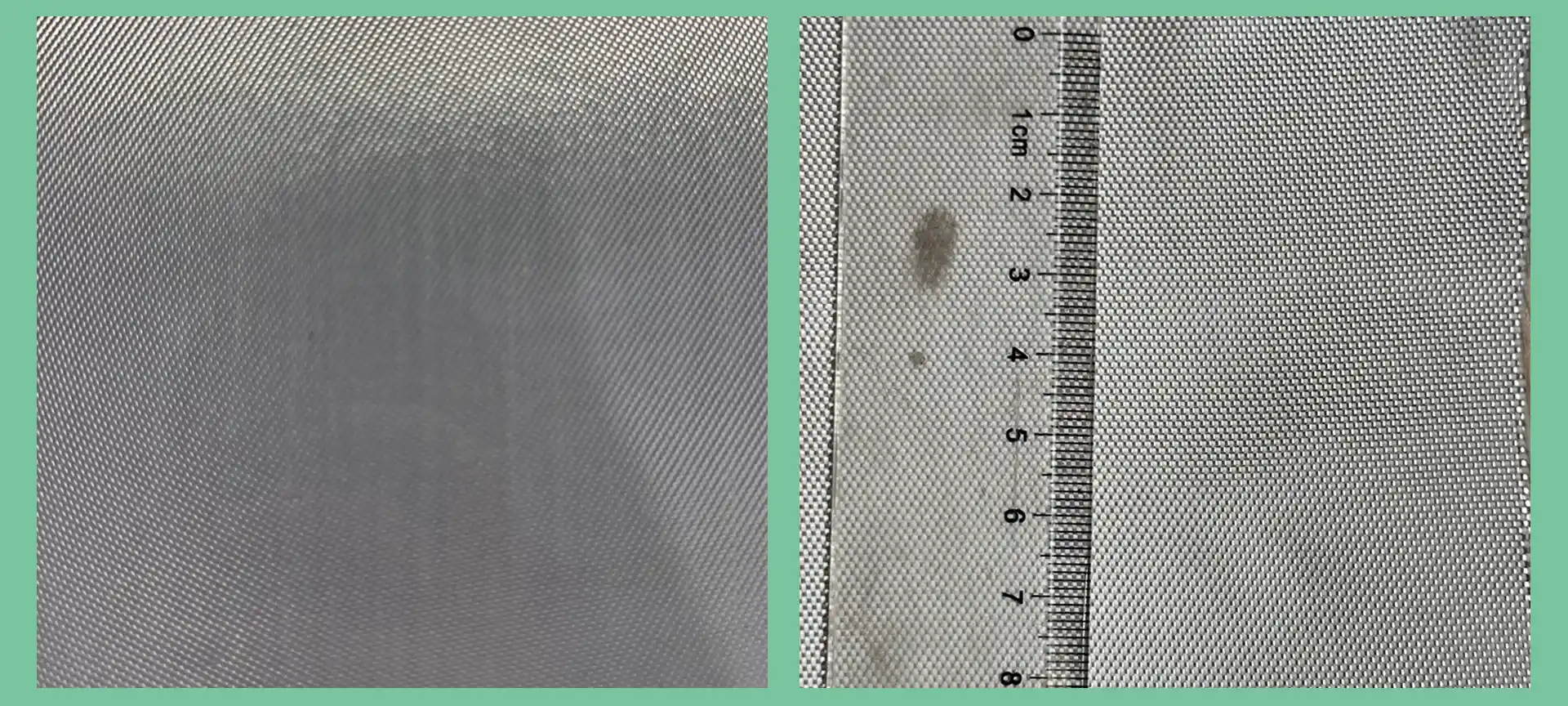
Not a long list. Yarn count, warp and weft. Areal weight against the certificate. Thickness at several points across the web, not just the middle. Loss on ignition. Moisture. Tensile in both directions, because a mill that is trimming glass to make weight will show up in the weft. Visual for fuzz, tight picks, and selvage damage.
Then I run a hand test. I take a meter of fabric and I drape it. Good electronic fiberglass fabric falls softly and evenly. Bad fabric has a mind of its own. It curls in one corner, or it feels stiff along one edge, or you can see light through it unevenly when you hold it up.
That last test takes ten seconds. It has caught more problems for me than any certificate.
Buying Notes, Because Somebody Has To Say It
Price per kilo is the worst way to compare electronic fiberglass fabric. It ignores the finish, it ignores the packaging, it ignores the lot to lot consistency, and it ignores what a failed lot costs you.
Ask for a sample roll before you qualify anyone, and run it on the actual line with the actual resin. Run a full press cycle. Do the thermal shock. Cut the microsection and look at the hole wall. That is two weeks and a few thousand dollars of material. It is the cheapest insurance you will ever buy.
Also be realistic about lead time and volume. Electronic fabric is a specialty line. A mill running thin styles cannot flex like a roving line. If a supplier promises you 1080 in quantity at roving prices with a two week lead time, check the mill. Somebody is going to lose money on that order and it will not be them.
The last thing. Ask who you are talking to. If you are buying electronic fiberglass fabric and the person on the other end has never seen a loom or a prepreg line, you are going to spend a lot of time translating. Find the person who has opened the rolls. Tell them your board. Let them argue with you.
That conversation is worth more than any spec sheet. I promise you that.
Post time: Sep-16-2026


