

Inquiry for Pricelist
For inquiries about our products or pricelist, please leave your email to us and we will be in touch within 24 hours.
CLICK TO SUBMIT AN INQUIRY


This is an 8-harness satin in E-glass. Warp and fill both run a single G75 yarn. Construction lands at 60 ends by 58 picks per inch, areal weight at 210 grams per square meter, and one finished ply near 0.175 millimeters.
Satin interlacing crosses yarns less often than plain weave. The fabric packs flat in a prepreg line and resin wets through in one pass. Any weave ridge telegraphs through copper foil, so the smooth face is not cosmetic. It is a yield number.
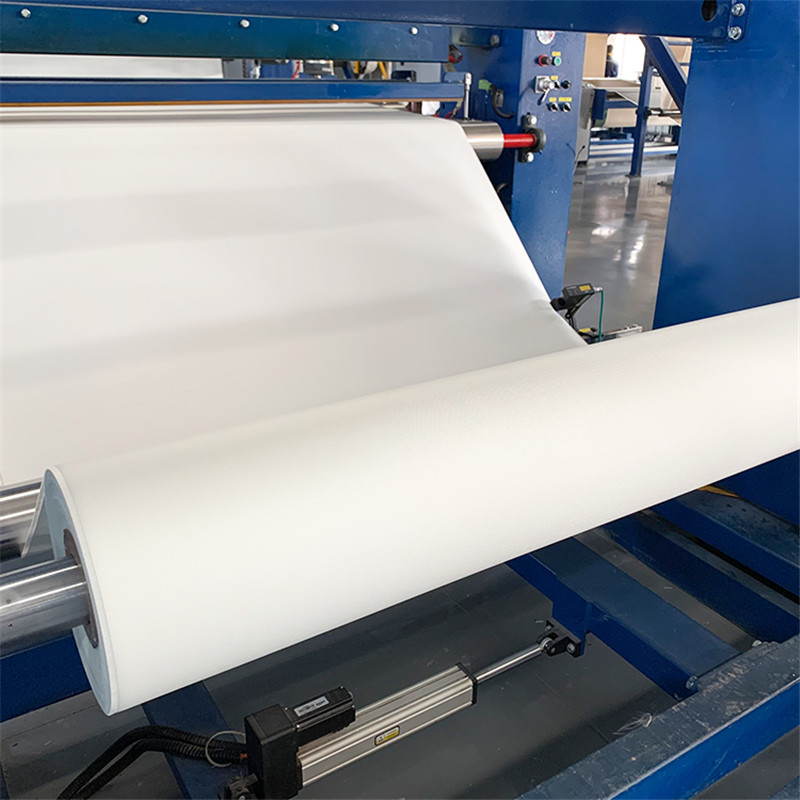
We slit 7628 fiberglass fabric to your line width, from 500 up to 1270 millimeters. Clean edges, no loose selvage, because a frayed edge wipes out on a treater station and costs you a shift.
Grey loom-state fabric comes off the loom wearing starch-oil sizing. That sizing protects yarn through weaving and poisons the resin bond afterward. Electronic grade goes to heat cleaning first, which burns the sizing out. Then a silane finish goes on, matched to your resin system. Epoxy laminates want an epoxy-functional silane from the KH-560 family. The finish runs a few tenths of a percent by weight, and it carries the entire glass-to-resin bond.
In 2009 a CCL plant in Suzhou called me in on a delamination claim. Boards were failing after reflow. Their buyer had saved money on grey fabric from a broker, no heat clean and no silane. Peel strength ran a third of spec, and the glass held on by mechanical grip alone. The plant lost the account anyway. Finished fabric costs more per meter, and it is still the cheapest insurance in the stack.
When you buy 7628 fiberglass fabric, ask for the finish type by name and the content number. Hesitation on either one tells you the mill does not control it.
Bow and skew stay under 1 percent. Fisheyes get counted on a backlight table per 100 square meters. Broken filaments get marked, and so do oil spots. On electronic grade we cut defects out rather than pass them downstream. Every roll is weighed and logged against a plus or minus 4 gram tolerance.
Moisture gets measured too. Anything above 0.2 percent goes back into the oven. Wet cloth under pressure turns to steam, and steam leaves blisters across a full sheet.
The finished fabric spec that governs this material comes from IPC-4412, and we ship against it. Our mill also operates under ISO 9001:2015. Certificates travel with every container.
Numbers from our standard electronic grade production. Every figure below appears on the roll certificate.
Typical Specifications—7628 Fiberglass Fabric
| Specification | Value |
|---|---|
| Weave style | 8-harness satin |
| Yarn, warp and fill | EC9-68 1×0 (G75) |
| Construction | 60 × 58 per inch |
| Areal weight | 210 g/m², tolerance ±4 g/m² |
| Finish | Epoxy silane (KH-560 type), 0.2–0.6% |
| Bow and skew | ≤0.75% / ≤1.0% |
| Fisheyes | ≤10 per 100 m² |
| Width | 500–1270 mm, slit to order |
| Moisture | ≤0.2% |
| Roll length | 1000–2500 m |
These numbers stay boring until one of them is wrong. Then each one becomes a meeting.
Stock widths run 1060 and 1270 millimeters. Custom slits take 10 to 15 working days. Rolls ship on rigid cores, PE wrapped, moisture logged, one certificate per roll.
Tell us your press width and we will quote the slit that cuts your edge waste to zero. For thinner builds, our 1080 and 2116 styles step the thickness down. For heavy wet-layup fills, the powder chopped strand mat covers the bulk. Send a panel spec and we answer inside a day.
For inquiries about our products or pricelist, please leave your email to us and we will be in touch within 24 hours.


