

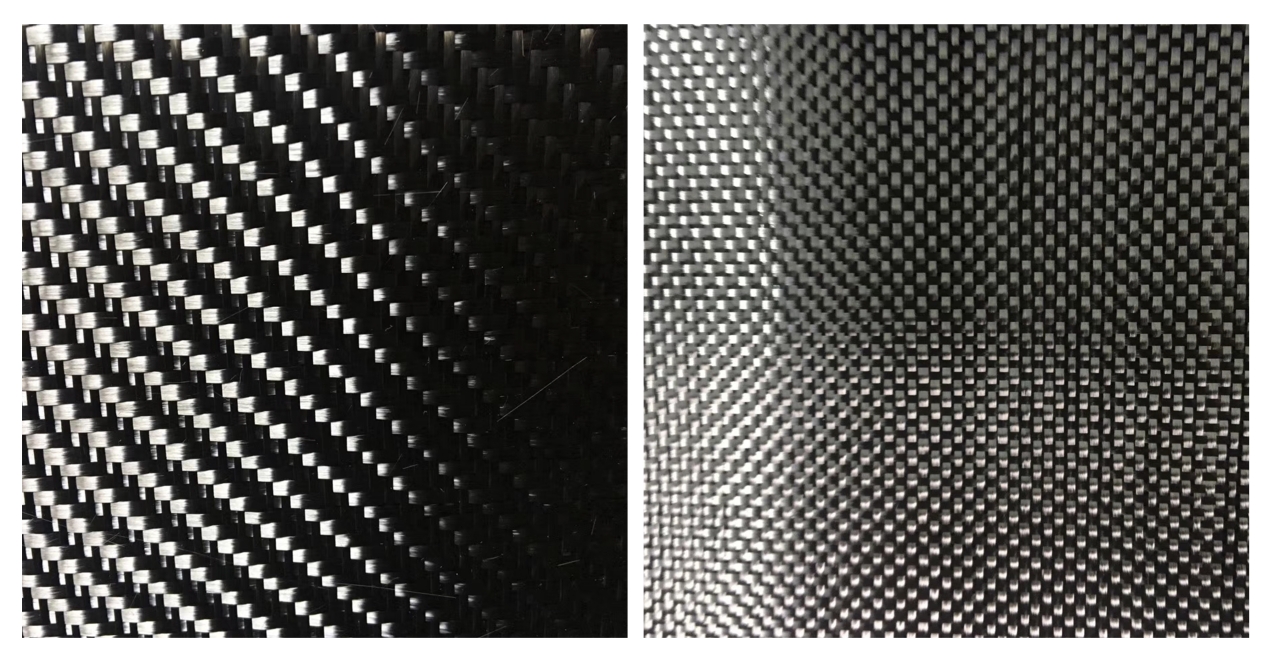
Carbon fiber has earned its reputation honestly. The Boeing 787 is roughly 50% composite by weight. Formula 1 monocoques have been built from it since the early 1980s. Prosthetic limbs, satellite structures, wind turbine blades, high-end bicycle frames — the material shows up wherever engineers need to carry load without carrying weight.
At some point, that track record turned into an assumption: that carbon fiber is simply the best structural material available, full stop. It isn’t. Several materials exceed its performance in specific, measurable ways — and knowing which ones, and why, is more useful than treating carbon fiber as the ceiling.
Here’s where it actually gets beaten, and what that means in practice.
What “Stronger” Actually Means — and Why It Changes Everything
The word does a lot of work in materials engineering, and carbon fiber’s dominance depends heavily on which definition you’re using.
Carbon fiber’s genuine advantage is specific strength and specific stiffness — the ratio of mechanical performance to weight. Against most structural metals, it wins that contest decisively, which is why aerospace and motorsport adopted it as aggressively as they did. Steel is stronger in absolute terms. Carbon fiber is stronger per kilogram, which is the number that matters when every gram costs fuel or lap time.
But structural performance isn’t one number. It’s at least five:
● Tensile strength — resistance to being pulled apart
● Compressive strength — resistance to crushing (a relative weakness of carbon fiber)
● Stiffness / elastic modulus — resistance to elastic deformation under load
● Toughness — energy absorbed before fracture, not to be confused with strength
● Thermal stability — whether those properties hold at elevated temperatures
Carbon fiber is excellent at the first three on a per-weight basis. It is genuinely poor at toughness — it fractures without warning rather than deforming — and it starts degrading above roughly 400°C in air depending on the matrix. Those two gaps are where every material on this list finds its opening.
1. Graphene — Stronger on Paper, Complicated in Practice
Graphene gets the most press, and the numbers justify the attention. A single-atom-thick sheet of carbon in a hexagonal lattice, its tensile strength runs roughly 200 times that of structural steel by weight. Its elastic modulus exceeds carbon fiber’s. On those two metrics, nothing that exists comes close.
So why aren’t aircraft built from it?
The problem is entirely manufacturing. Graphene’s properties exist at the molecular level, and they depend on structural perfection. The moment you try to build something at human scale — anything you could actually hold — you introduce grain boundaries, defects, and inconsistencies that collapse those theoretical numbers fast. A defect-free graphene sheet larger than a few centimeters remains an unsolved engineering problem at commercial scale in 2025, let alone a structural panel.
Where graphene is finding genuine traction is as an additive. Incorporating graphene flakes or graphene oxide into carbon fiber resin systems improves interlaminar shear strength, thermal conductivity, and in some formulations, electrical performance. The material makes carbon fiber composites measurably better. It doesn’t replace them.
Verdict: Graphene is unambiguously stronger than carbon fiber at the nanoscale. At engineering scale, it’s an enhancer — a significant one, but not a substitute for the structural fiber itself. Yet.
2. Carbon Nanotubes — The Closest Theoretical Rival
The numbers on paper are difficult to argue with. Carbon nanotubes have theoretical tensile strength and stiffness that exceed the best high-modulus carbon fiber by margins large enough that, if you could build structural components from them at scale, the aerospace and motorsport industries would look different.
That “if” has been sitting there for about thirty years.
The core problem isn’t understanding the material — researchers know exactly why CNTs perform as they do, and the physics is solid. The problem is that a carbon nanotube is, by definition, a nanometer-scale object. Getting billions of them to align in the same direction, bond coherently, and form a continuous fiber without the defects that collapse those theoretical properties is a manufacturing challenge that has resisted every serious attempt at industrial-scale solution. CNT fibers exist in lab settings. Some have posted impressive numbers in controlled testing. None have consistently outperformed high-modulus carbon fiber across the full property suite under conditions that reflect real structural applications.
What CNTs do well right now is work as an additive — dispersing them through a carbon fiber prepreg’s resin matrix improves interlaminar shear strength, addressing one of the more persistent failure modes in carbon fiber composites. That’s a genuine, commercially useful contribution. It’s just not what anyone was imagining when CNT research started generating headlines in the 1990s.
The electrical conductivity angle is the other live application: CNTs can make composite structures conductive without the weight penalty of embedded metallic meshes, which matters for lightning strike protection in aircraft and electromagnetic shielding in electronics enclosures.
Verdict: CNTs are not a stronger-than-carbon-fiber material you can specify today. They’re a carbon fiber composite enhancer that happens to have extraordinary standalone properties it hasn’t yet found a way to express at engineering scale. Whether that changes in the next decade depends less on materials science than on manufacturing process development.
3. Boron Nitride Nanotubes — Where Heat Is the Enemy
If graphene and CNTs are carbon fiber’s structural rivals on paper, boron nitride nanotubes address a different weakness entirely: what happens when the load comes with heat attached.
BNNTs are structurally analogous to CNTs — tubular, nanoscale — but built from alternating boron and nitrogen atoms rather than carbon. Their tensile strength and stiffness are comparable. The critical differentiator is thermal stability: BNNTs remain structurally intact in air up to around 900°C. Carbon nanotubes oxidize and begin degrading around 400°C. Standard carbon fiber composites, depending on the resin matrix, start losing structural integrity somewhere between 120°C and 250°C under sustained load.
For hypersonic vehicles, re-entry heat shields, and next-generation jet engine components, that thermal gap isn’t a footnote — it’s the entire design problem. A material that loses its strength at 200°C isn’t a candidate for a component that sees 800°C, regardless of how good its room-temperature numbers are. BNNTs are being actively developed for precisely these applications, though they remain largely pre-production.
Verdict: In any application where structural load and serious heat arrive together, BNNTs offer a capability that carbon fiber — and most advanced composite materials — simply cannot match. The limitation is availability, not performance.
4. Silicon Carbide Fibers — The High-Temperature Solution Already Flying
While BNNTs are still largely developmental, continuous silicon carbide fibers are already in service in environments where carbon fiber would fail outright.
SiC fibers maintain structural properties at temperatures well above 1,000°C, making them viable for jet engine hot sections, turbine components, and aerospace heat exchangers — applications where carbon fiber isn’t even in the conversation. They also address carbon fiber’s compressive strength problem: one of carbon fiber’s less-discussed limitations is that its compressive strength sits considerably below its tensile strength, a consequence of how individual fibers respond to microbuckling under axial compression. SiC fibers don’t have that asymmetry to the same degree.
The practical constraints are cost and processability. SiC fiber composites require ceramic matrix systems rather than the polymer matrices used with carbon fiber, which means different tooling, different processing temperatures, and higher per-part cost. They occupy a narrower application space for those reasons.
Verdict: For structural integrity under extreme thermal and corrosive conditions, SiC fibers outperform carbon fiber in ways that aren’t close. Where the temperature envelope rules carbon fiber out, SiC fiber is often the engineering answer — and unlike most materials on this list, it’s an answer that already exists in production hardware.
5. UHMWPE Fibers (Dyneema, Spectra) — When Toughness Beats Stiffness
Carbon fiber doesn’t fail gracefully. When it goes, it goes all at once — a sudden fracture, no warning, no deformation to tip you off. That brittleness is the tradeoff you accept for its extraordinary stiffness and specific strength, and in aircraft structures or racing monocoques, it’s a tradeoff that makes engineering sense.
Dyneema and Spectra work on entirely different physics. Both are UHMWPE fibers — Ultra-High-Molecular-Weight Polyethylene — and what they’re genuinely exceptional at is absorbing energy rather than resisting deformation. Their specific energy absorption per unit weight sits among the highest of any structural fiber. A panel built from Dyneema doesn’t shatter when something hits it hard; it stretches, distributes the load, and dissipates the impact across the material. That behavior is exactly what you want when the design problem is stopping a bullet or a blade rather than holding a wing in shape.
There are other properties worth noting: UHMWPE fibers float in water, which matters for marine ropes and offshore mooring lines where weight compounds over kilometers of cable. They hold up well against abrasion and most chemical exposure. And unlike carbon fiber composites, they’re flexible enough to be woven directly into cut-resistant gloves, body armor, and protective textiles — no molds, no autoclave, no resin.
The stiffness gap is real. UHMWPE’s elastic modulus is substantially lower than carbon fiber’s, which rules it out for structural applications where deflection under load is the governing constraint. No one is building aircraft spars from Dyneema.
But frame the question differently — what is stronger than carbon fiber when the load is kinetic, not static? — and UHMWPE wins on the metric that actually governs the design. It’s a different performance space, not a lesser one.
Verdict: For impact resistance and toughness, UHMWPE fiber outperforms carbon fiber composites in measurable, application-defining ways. The strongest lightweight material for ballistic protection isn’t the stiffest one — it’s the one that absorbs the most energy before it fails.
6. Metal Matrix Composites — Bridging Metallic and Composite Properties
There’s a category of engineering problem that carbon fiber composites handle poorly and pure metals handle expensively, and MMCs exist because of it.
Take a satellite bracket that needs to be light, dimensionally stable across a 300°C thermal swing in orbit, electrically conductive for grounding, and stiff enough that it doesn’t flex under vibration loads. A polymer-matrix carbon fiber part covers maybe two of those requirements. An aluminum MMC — the metal reinforced with silicon carbide particles — can cover all four. It won’t win a weight contest against CFRP outright, but specific stiffness improves meaningfully over unreinforced aluminum, and it doesn’t require workarounds for the thermal and electrical behavior that polymer composites struggle with.
Automotive brake rotors are a cleaner example. The job is to absorb and dissipate massive amounts of heat under repeated heavy braking while resisting wear and maintaining dimensional integrity. Carbon fiber composites are used in this application at the top end of motorsport, but they require operating temperatures to stay within a narrow band and are expensive to replace. Silicon carbide reinforced aluminum MMCs handle a wider thermal range, tolerate more abuse, and cost less per service cycle for road applications where replacement intervals need to be practical.
The compressive strength point is worth making plainly: carbon fiber’s compressive strength is considerably lower than its tensile strength — a consequence of how fibers respond to microbuckling. MMCs don’t carry that asymmetry. For components loaded primarily in compression — bearing surfaces, structural nodes under axial load, mounting hardware — that matters more than the tensile headline numbers.
Verdict: MMCs don’t outperform carbon fiber on specific tensile strength. They outperform it on the combination of thermal range, compressive strength, electrical behavior, and impact toughness that certain applications require simultaneously. When the design needs a material that behaves like a metal but performs closer to an advanced composite, MMCs fill a gap carbon fiber was never designed for.
Why Carbon Fiber Still Wins Most of the Time
None of the above is an argument that carbon fiber is obsolete. Its continued dominance in high-performance structural applications reflects real advantages that no single competitor has closed.
The manufacturing ecosystem is the part that rarely gets mentioned. Carbon fiber composites benefit from decades of process refinement — layup techniques, autoclave cycles, non-destructive inspection methods, repair protocols, design allowables databases, certified supply chains. An engineer specifying a carbon fiber composite part in 2025 has access to simulation tools, failure mode libraries, and supplier qualification processes that simply don’t exist yet for most of the materials on this list. That institutional knowledge has real engineering value, and it doesn’t transfer automatically to a new material no matter how good that material’s test coupons look.
Graphene and CNTs will almost certainly improve carbon fiber composites before they replace them. SiC fibers and BNNTs address thermal problems carbon fiber was never designed to solve. UHMWPE addresses a toughness problem in applications with entirely different load cases. The pattern is consistent: none of these materials beat carbon fiber across the board. Each beats it on a specific axis where carbon fiber’s design compromises happen to matter most.
Where the Field Is Actually Heading
The more useful question isn’t which material replaces carbon fiber — it’s how these materials get used together.
Structural panels with a carbon fiber primary laminate, graphene-enhanced resin for interlaminar toughness, and localized SiC fiber reinforcement in high-temperature zones are not speculative. They are in active development at major aerospace programs. The concept — hierarchical composites, or material systems engineered at multiple scales simultaneously — represents a genuine shift in how structural materials get specified. Instead of selecting the single best material for a part, engineers are beginning to architect material combinations tailored to the specific load cases, temperature gradients, and failure modes a component will actually see in service.
The competitive framing — graphene vs. carbon fiber, CNTs vs. carbon fiber — misses the direction the technology is moving. The answer to “what is stronger than carbon fiber” is increasingly: a composite that contains carbon fiber as one of several reinforcement phases, each contributing where it performs best.
Summary
|
Material |
Where it outperforms carbon fiber |
Current practical limit |
| Graphene | Tensile strength, stiffness (nanoscale) | Not manufacturable at structural scale |
| Carbon nanotubes | Theoretical tensile strength + stiffness | Alignment, defect control, cost |
| Boron nitride nanotubes | Structural stability at extreme heat | Pre-production, limited availability |
| Silicon carbide fibers | High-temperature strength, compressive strength | Cost, ceramic matrix processing |
| UHMWPE / Dyneema | Impact toughness, energy absorption per kg | Low elastic modulus |
| Metal matrix composites | Thermal range, compressive strength, conductivity | Weight, fabrication complexity |
Carbon fiber isn’t the strongest material. It’s the most practical strong material across the widest range of structural applications — and that’s a harder title to take away than any single performance metric.
Post time: May-29-2026


